
Last updated November 21, 2026
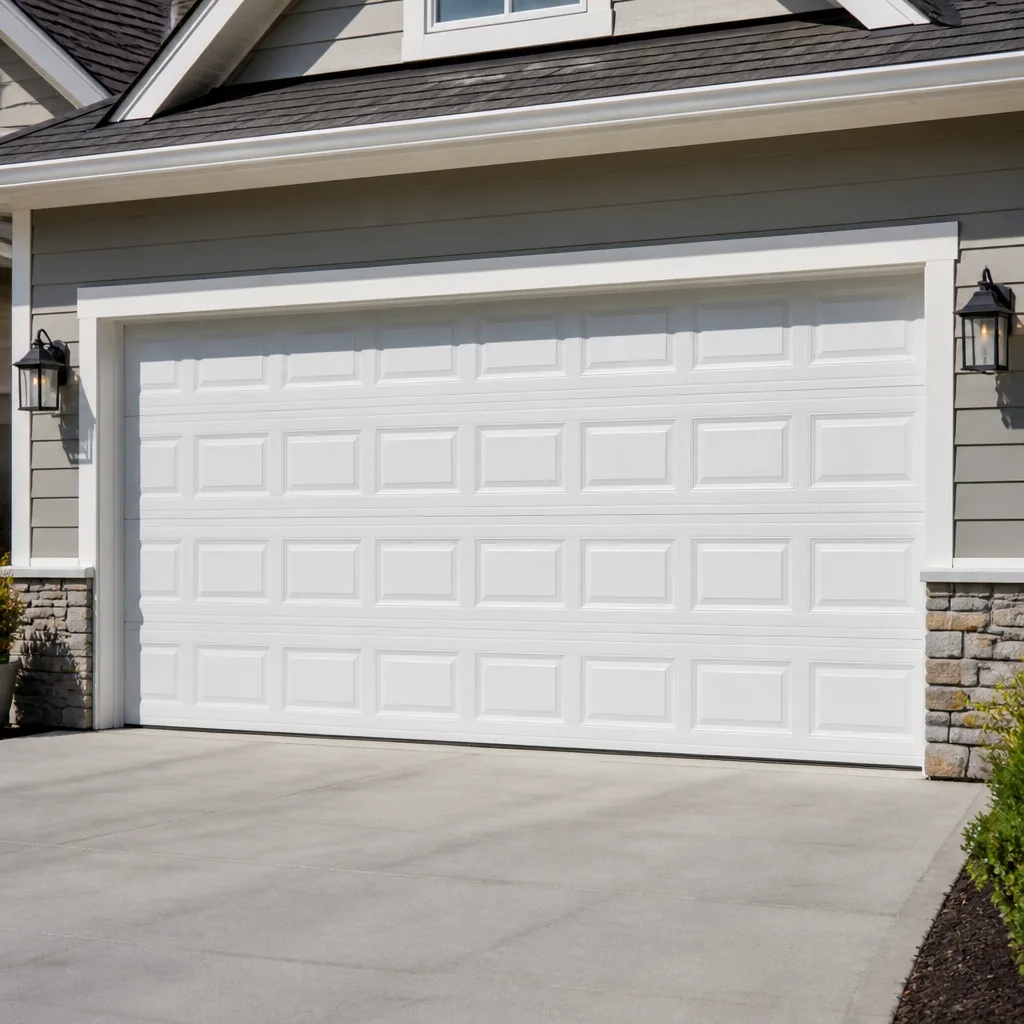 Raised-panel steel
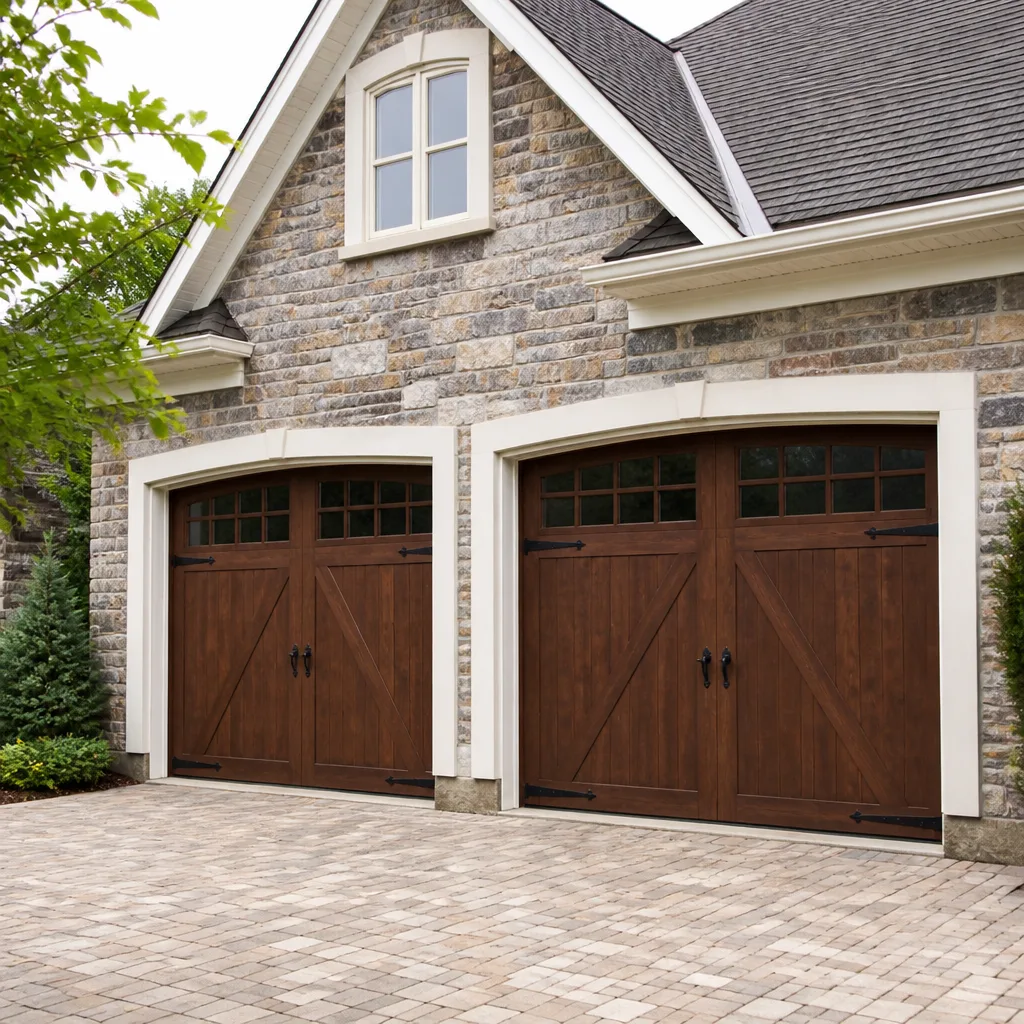 Carriage house
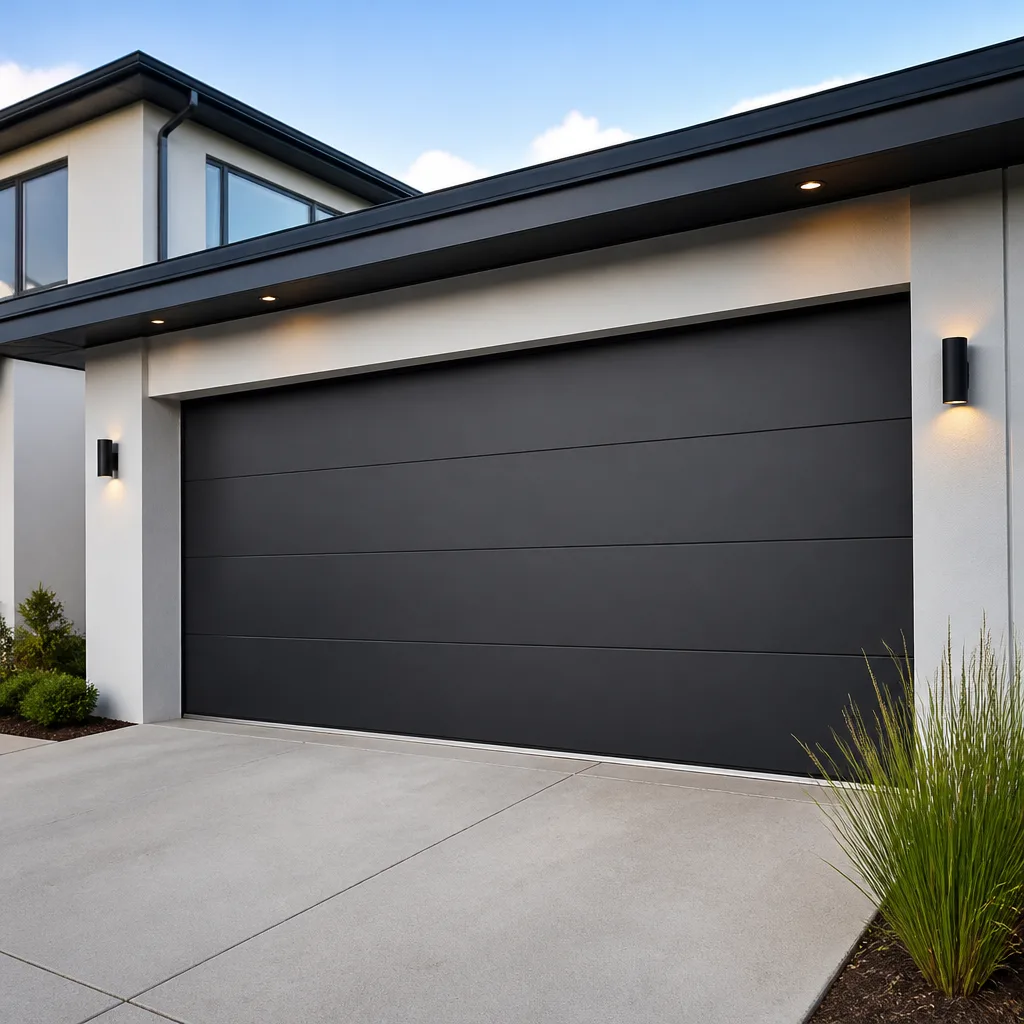 Modern flush
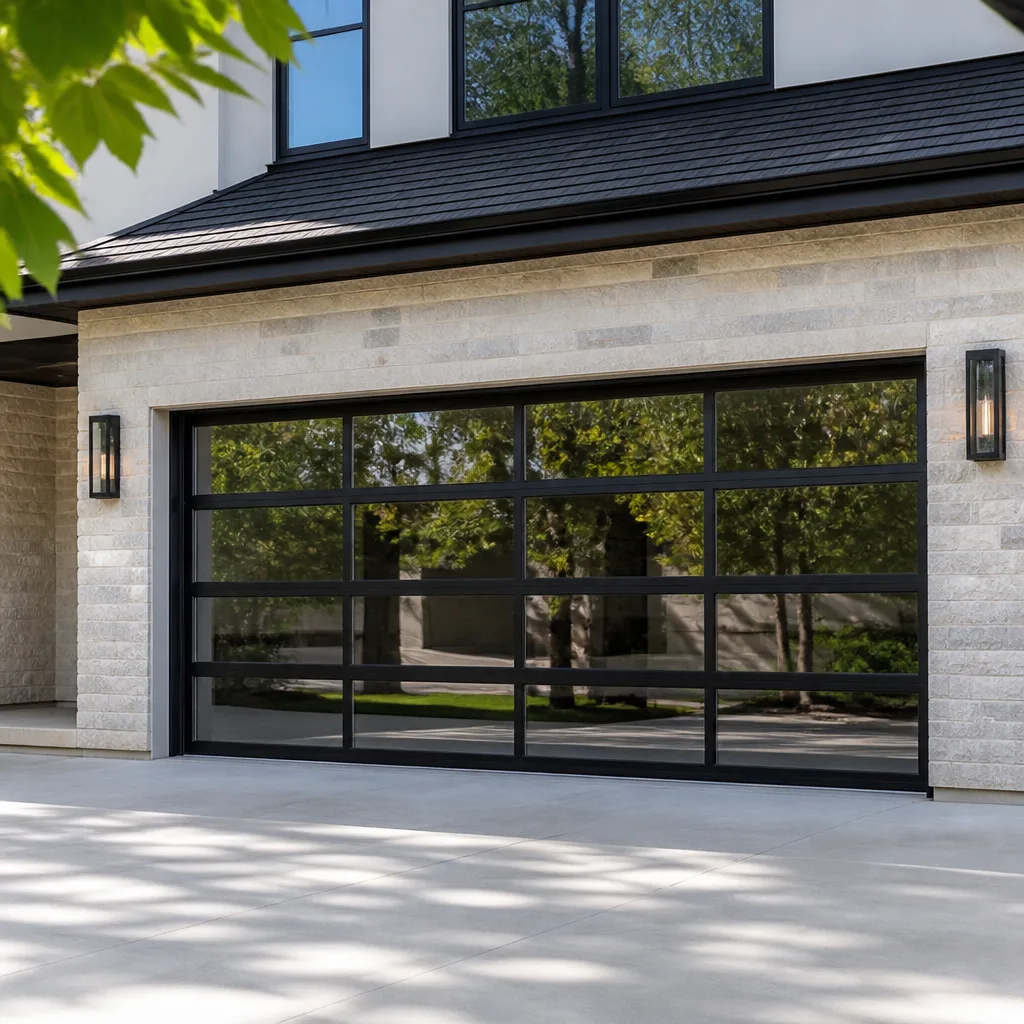 Full-view glass
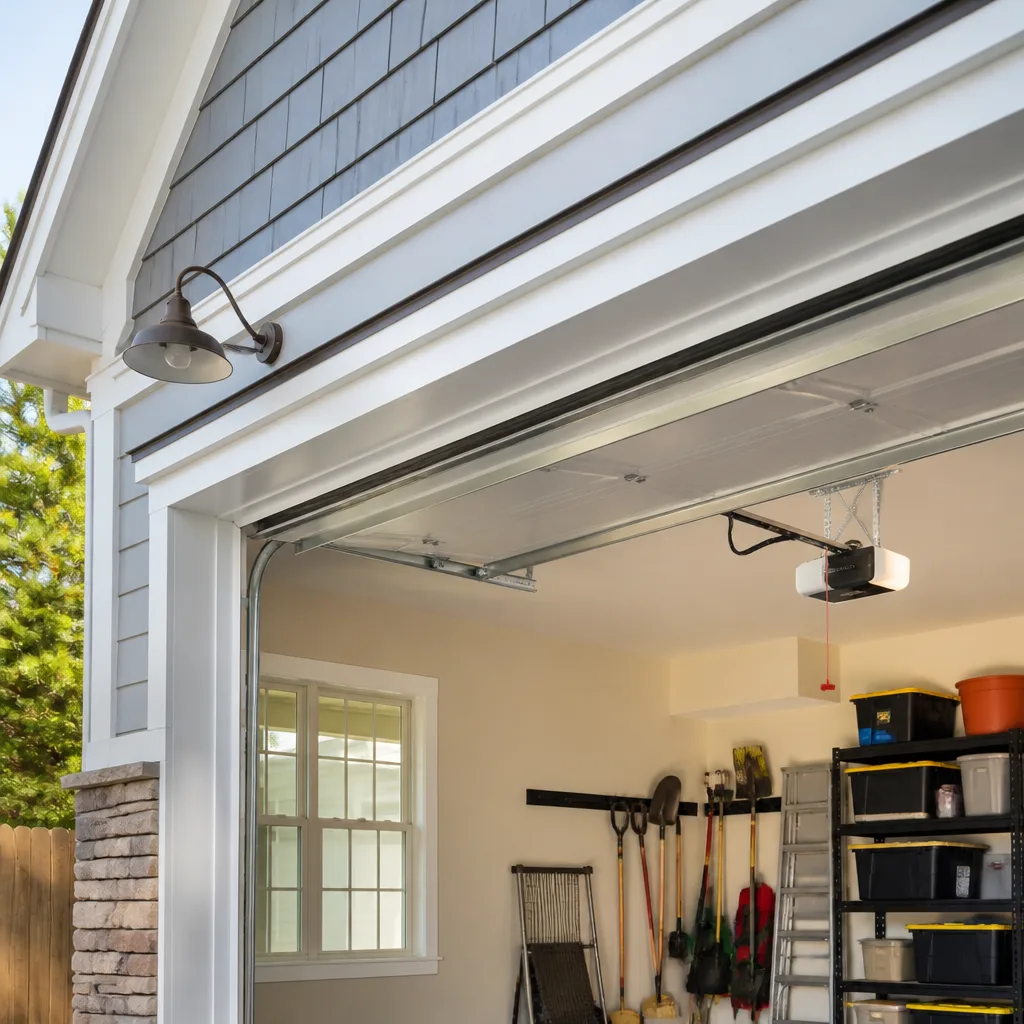 LiftMaster openers
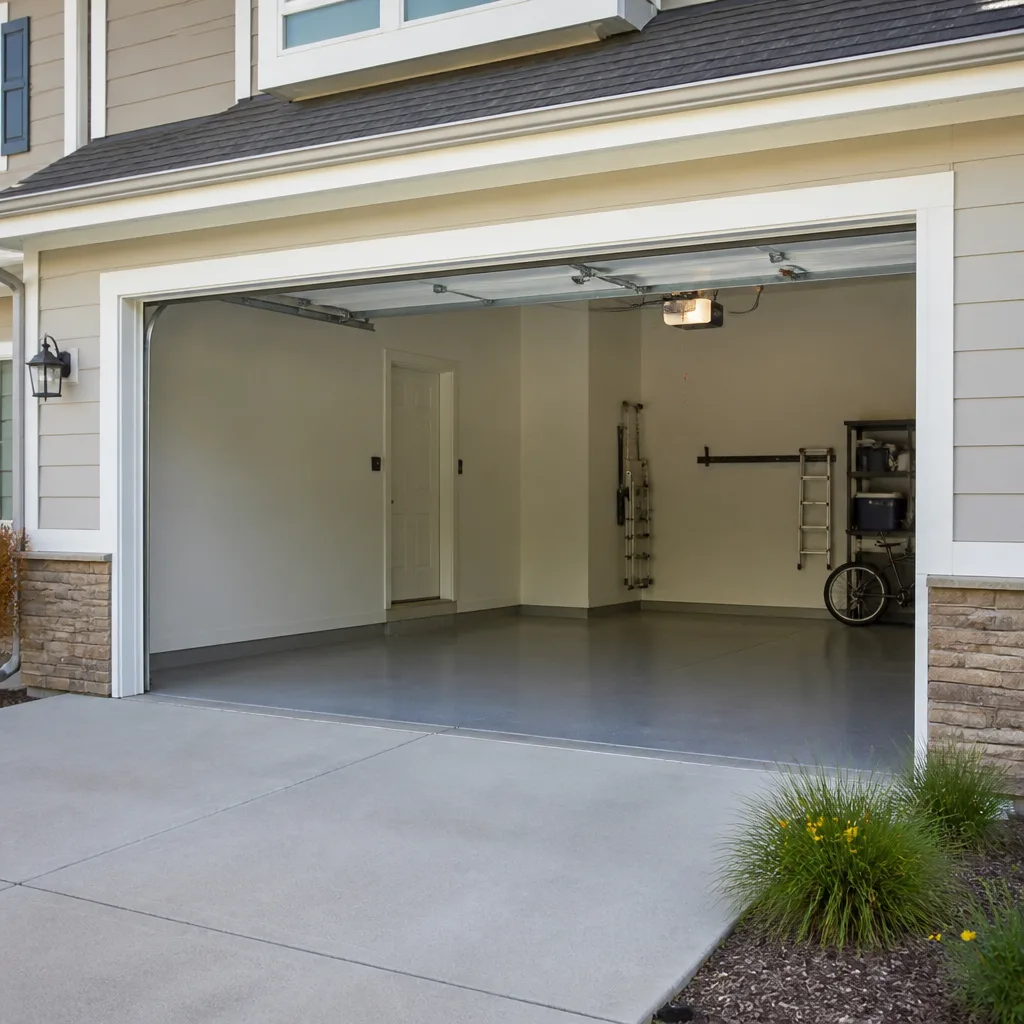 Chamberlain openers
Full 25-point door and opener safety check with every visit - springs, cables, rollers, tracks, and your LiftMaster or Chamberlain opener included
You get a price before we start. It does not change when the pro arrives.
Get your free estimateDIY vs Professional Garage Door: The Columbia Homeowner’s Decision Guide
Most home repair decisions come down to skill and time. Garage doors are different. A torsion spring at rest holds enough stored energy to cause permanent injury in less than a second, and that single fact rewrites the whole DIY calculation. It’s not that homeowners in Columbia can’t turn a wrench. It’s that a handful of garage door tasks carry a physical risk that no saved labor cost can justify, while plenty of other tasks are genuinely fine to handle yourself. This guide separates the two, task by task, so you know exactly where the line sits before you pick up a tool.
Quick Answer
Safe DIY garage door work is limited to lubrication, photo-eye sensor alignment, weather seal replacement, and cosmetic panel touch-up. Anything involving torsion or extension springs, lift cables, bottom brackets, or opener high-voltage wiring should go to a trained technician, because those components store or route force that can injure you or damage the door beyond economical repair. If your door is stuck open, hanging unevenly, or making a loud bang, call a professional rather than experiment.
Styles & brands we work with
- Raised-panel steel
- Carriage house
- Modern flush
- Full-view glass
- LiftMaster openers
- Chamberlain openers
Table of Contents
- Why Garage Doors Break the Usual DIY Rules
- The Task-by-Task Breakdown: What’s Safe and What Isn’t
- Springs and Cables: Why the Risk-Reward Math Fails
- What DIY Opener Installation Really Involves
- The Hidden Cost of a DIY Repair That Ends in a Service Call
- Smart Openers and the Wi-Fi Learning Curve
- How to Be a Smart Participant in a Professional Repair
- What Columbia Homeowners Should Know About Their Doors
Why Garage Doors Break the Usual DIY Rules
A garage door is the largest moving object in most Columbia homes. It’s also a balanced system: springs counterweight the door’s full load so a small opener motor can lift hundreds of pounds, and cables route that force through brackets and drums. Every part depends on the others. Change one tension setting and the whole system shifts.
That balance is what makes garage doors unlike a leaky faucet or a sticking cabinet hinge. A faucet that leaks after a DIY repair drips a little more. A garage door that’s out of balance can slam, drop off a cable, or twist its panels out of alignment. The consequences are heavier and faster.
There’s a second reason to think twice. A garage door is a primary entry point to your home. When it’s stuck open, your house is exposed. That’s why we treat emergency garage door work as a genuine service category rather than a marketing phrase: a broken door that leaves a home unsecured shouldn’t wait for a next-week appointment.
In our experience, the homeowners who get the best outcomes aren’t the ones who avoid DIY entirely or the ones who attempt everything. They’re the ones who sort tasks correctly up front. Knowing which repairs are within reach and which aren’t is the entire decision.
The Task-by-Task Breakdown: What’s Safe and What Isn’t
Here’s how we’d sort common garage door jobs. If a task isn’t on the safe list, treat it as professional work.
Genuinely safe for a prepared homeowner
- Lubrication. Hinges, rollers, and the opener’s rail benefit from a garage-door-specific lubricant a couple of times a year. Avoid grease on the tracks.
- Photo-eye sensor alignment. If the door reverses immediately, check that the two sensors near the floor face each other and that nothing blocks the beam.
- Weather seal replacement. The rubber or vinyl strip along the bottom of the door and the seals around the frame are straightforward to swap.
- Panel touch-up and cleaning. Cosmetic work, rust prevention, and paint on steel panels are well within a homeowner’s reach.
- Track wiping and debris removal. Clearing grit and cobwebs from the tracks is fine. Bending tracks back into shape is not.
- Replacing the opener’s remote batteries and re-pairing remotes. Standard maintenance.
Requires a trained technician
- Torsion and extension spring replacement. The highest-risk job in the trade.
- Cable replacement or re-spooling. Cables are under tension and can whip if released.
- Bottom bracket and drum work. Both hold spring tension.
- Track realignment and panel replacement. A misaligned track can throw the door off its rollers.
- Opener installation and high-voltage wiring. The electrical side is a licensed-trade job.
- Any door that has come off its tracks or is hanging unevenly. Stop operating it and call for help.
A quick test for balance (with the door closed and the opener disconnected) is to lift the door halfway by hand and see whether it stays put. If it drifts or slams, the spring tension is wrong. Don’t adjust it yourself. Book a professional diagnosis.
Springs and Cables: Why the Risk-Reward Math Fails
Torsion springs sit on a shaft above the door. Extension springs run along the sides. Both hold the door’s weight so the opener doesn’t have to. When one fails, it doesn’t fail gently. The stored energy releases instantly, and the sound is often described as a gunshot. That release is why spring work is a specialty, not a side task.
The specific failure modes of DIY spring work are well understood:
- Winding bars slip. Torsion springs are tensioned with steel rods inserted into the winding cone. Without proper technique, a bar can kick out and strike a hand or face.
- Improperly seated springs unwind. A spring that isn’t locked correctly on the shaft can spin loose after the door is cycled a few times.
- Cables release under load. If a cable is cut or a bottom bracket is loosened while the spring is still tensioned, the cable can snap back with force.
- Wrong spring for the door weight. A spring sized for a lighter door will over-cycle and fail early, sometimes within months.
Cables and springs work together. A cable under tension with a spring above it is a combination that rewards training and punishes guesswork. Our technicians have up to 10 years of experience, and spring repair is one of the core services we handle. That depth of focus is exactly why we tell Columbia homeowners this is the one repair not to DIY. garage door spring repair is a job where the professional route is the only sensible one.
What DIY Opener Installation Really Involves
An opener manual makes installation look like a weekend project: two brackets, a rail, a few lag bolts, done. The reality has more moving parts than the page count suggests. The bracket has to be anchored into structural framing, not drywall or thin sheathing. The rail has to be level and aligned with the door’s travel. The safety reverse has to be tested and set correctly. And the wiring has to be done neatly and safely, with the opener’s low-voltage control wiring routed cleanly and the high-voltage connection done by someone qualified to touch it.
In practice, the problems we see after a DIY opener install tend to cluster around the same few areas:
- Header brackets screwed into material that can’t carry the opener’s pull, leading to sag or failure over time.
- A rail that’s slightly out of level, so the door binds or the travel limits can’t be set correctly.
- Safety reverse not tested with a solid object, leaving the door non-compliant with its own UL safety requirement.
- Bracket placement that cracks a panel or voids the door’s warranty.
- Control wires pinched between the rail and the ceiling, causing intermittent faults.
Some of these are repairable. Some void the warranty on a new opener, and a few damage the door. If you’re set on installing your own opener, at least have the final safety-reverse adjustment and door balance checked by a technician before you rely on it daily. If the opener is already misbehaving, garage door opener repair is a straightforward fix with a clear diagnosis.
The Hidden Cost of a DIY Repair That Ends in a Service Call
The version of a DIY repair that goes well is invisible. The version that goes wrong is what technicians see every week. And the cost of a partially attempted repair isn’t just the second service call. It’s the extra work of undoing what came before.
Common scenarios: a homeowner replaces one torsion spring but not the other, then calls when the door still runs unevenly because the springs aren’t a matched pair. Someone forces a track back into alignment with a hammer, then needs the track replaced entirely because the mounting holes are distorted. A homeowner adjusts an opener’s travel limits by trial and error, and the door starts crushing the bottom seal on the way down. In each case, the professional call would have been less work than the cleanup.
None of this is a criticism of homeowners. Garage door systems are genuinely unintuitive to a first-timer, and YouTube tutorials skip the parts that go wrong. But it’s worth understanding up front: if you attempt a repair and it doesn’t go well, the technician’s job becomes bigger, not the same. The honest calculus is that the safe tasks are worth doing yourself, and the risky ones are worth skipping.
This is the same reason we work on the brand already in your home rather than steering every call to a new install. If the door is worth keeping, the right move is a correct repair, not a workaround. Our team works on equipment from LiftMaster, Chamberlain, Genie, Clopay, Amarr, Wayne Dalton, Craftsman, and Raynor, so diagnosis starts with a brand we already know well.
Smart Openers and the Wi-Fi Learning Curve
Modern openers have moved well beyond a single wall button. LiftMaster’s myQ ecosystem, for example, ties the opener into a phone app, and Chamberlain’s Wi-Fi models do the same. That’s a real improvement for Columbia households that want to check the door from work or let a neighbor in while they’re away. It also adds a layer that DIY troubleshooting often can’t handle.
The failure patterns we see with smart openers are almost always connectivity, not mechanics. Common ones:
- The opener is on a 2.4 GHz network and the home router is prioritizing 5 GHz, so the app can’t find it.
- Firmware updates have changed the pairing procedure since the manual was printed.
- The wall control is wired to the wrong terminal, so the opener powers up but ignores the app.
- An older opener has been retrofitted with a smart controller, and the two drain batteries or interfere.
The good news is that these are diagnostic problems, not force problems. They don’t carry the physical risk that springs do. If you’re comfortable with routers and app setup, you can often resolve them yourself. If you’ve spent an evening on it and the door still won’t connect, a technician can usually sort the wiring and pairing quickly. Getting the door working first, then reconnecting the smart features, is the right order.
How to Be a Smart Participant in a Professional Repair
The best outcome from a professional visit isn’t just a repaired door. It’s a homeowner who knows what was done, why, and what to watch going forward. You don’t need to understand the mechanics to be a smart participant. You need to ask good questions and keep good records.
What to watch during the visit
- Ask what’s being checked and why. A specialist will explain the balance test, spring tension, cable condition, and safety reverse. If they don’t, ask.
- Watch the safety reverse test. A trained technician will place a solid object in the door’s path and confirm it reverses. This is one of the most important checks and it’s quick.
- Note the brand and model of any parts replaced. Springs, rollers, and openers all have model-specific failure patterns and warranties.
- Ask whether the springs were replaced as a matched pair. Mismatched springs shorten the life of the door and the opener.
- Confirm the price before work starts. The written estimate is the price. Anything that changes scope mid-job should trigger a new conversation, not a surprise invoice.
What to keep afterward
- The written estimate, with the itemized parts and labor.
- The brand and model of parts installed, plus any warranty paperwork.
- Photos of the finished door, its tracks, and its spring assembly (for future reference).
- Dates of service, so you can spot whether a new noise correlates with a recent change.
These steps mean the next repair starts from a known baseline instead of guesswork. In our experience, that alone tends to shorten future visits and reduce repeat calls.
What Columbia Homeowners Should Know About Their Doors
Columbia homes span a wide range of vintages, from the original villages to newer construction. That matters for garage doors because the failure pattern depends on the door’s age and how it was maintained, not just which brand is on the opener.
Older homes in established Columbia neighborhoods often have wood-composite or early steel doors where the bottom section has absorbed moisture over the years. Those doors can develop sag and rust along the bottom edge. Modern doors in newer builds are more likely to have smart openers and are more often lifted by a Chamberlain or LiftMaster unit than a legacy mechanical model. Recognizing which you have is the first step in any repair decision.
Maryland’s seasonal swing matters too. Winters are cold enough that the seals shrink, and summers are humid enough that the wood sections swell and stick. A door that runs smoothly in the fall can bind in late summer. If you’re in Columbia and your door has started to struggle once a year, that’s the reason.
Building code specifics are set by Howard County and the local permitting authority, so any structural change (widening an opening, changing a header) should be confirmed with the county’s building department before work begins. Regular repairs to an existing door typically don’t require a permit, but when in doubt, ask.
Whether you need garage door repair or a fresh diagnosis, Columbia homeowners deserve a straight answer on what’s repairable and what’s not.
Common Mistakes to Avoid
- Attempting a spring replacement with generic tools. Winding bars exist for a reason; using a screwdriver or a rod of the wrong size is a common way to lose control of a loaded spring. Trained technicians use the right tool for the spring size.
- Replacing one torsion spring instead of the pair. Springs wear together. A new spring next to a tired one puts uneven load on the door and shortens the life of both.
- Forcing a misaligned track back into place with a hammer. Tracks are thin gauge steel; one hard knock can throw the door off its rollers. Realign with a proper clamp and check panel alignment, or call.
- Adjusting the opener’s travel limits by trial and error. This is one of the easiest ways to crush the bottom seal or stress a panel. Set limits once, with the manual, and confirm with the safety reverse test.
- Cutting a cable to “release tension” before the spring is unwound. The spring holds the cable’s tension. Without releasing the spring first, the cable will snap back.
- Disconnecting a smart opener’s wiring while the power is on. Low-voltage wiring is forgiving but high-voltage terminals are not. Turn the breaker off before touching any opener wiring.
- Skipping the safety reverse test after any work. A door that closes without reversing is a serious safety hazard. Test it every time the opener or door is touched, DIY or not.
See the difference
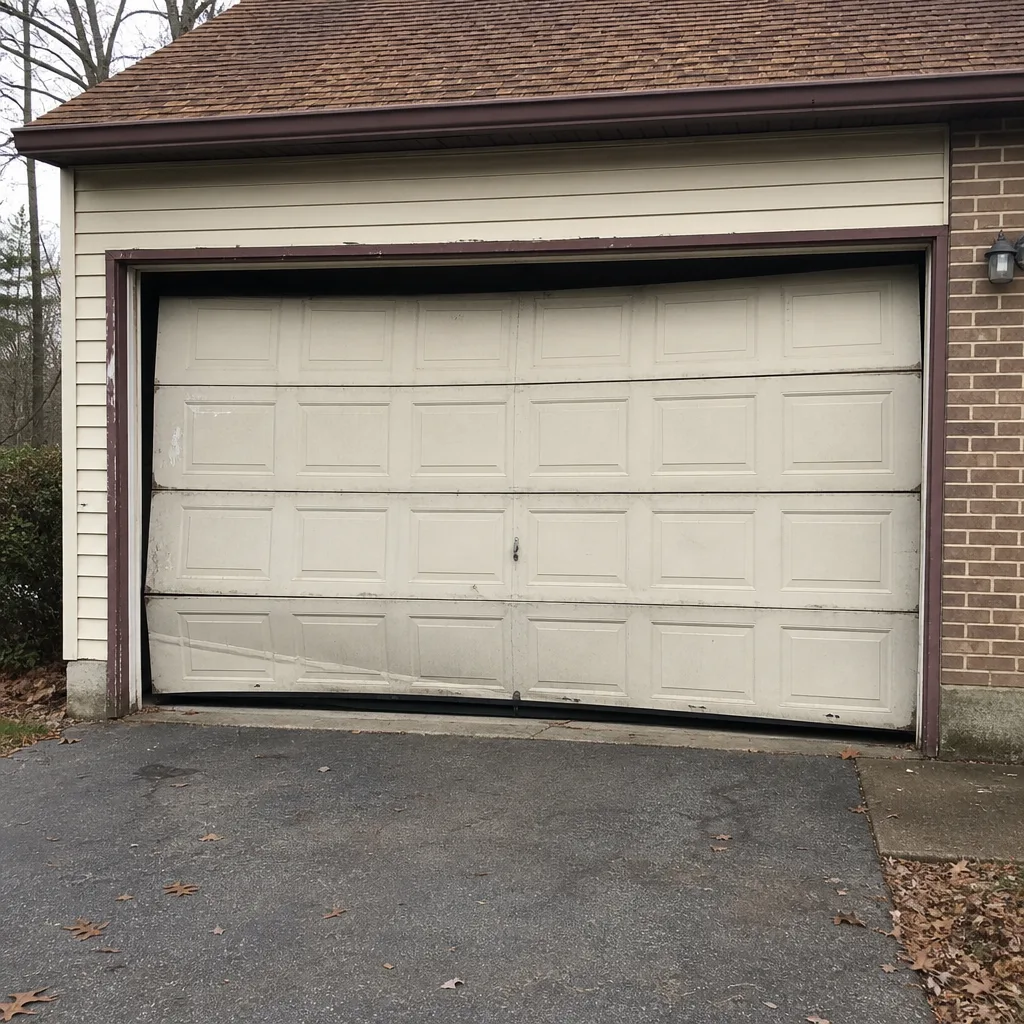 Before
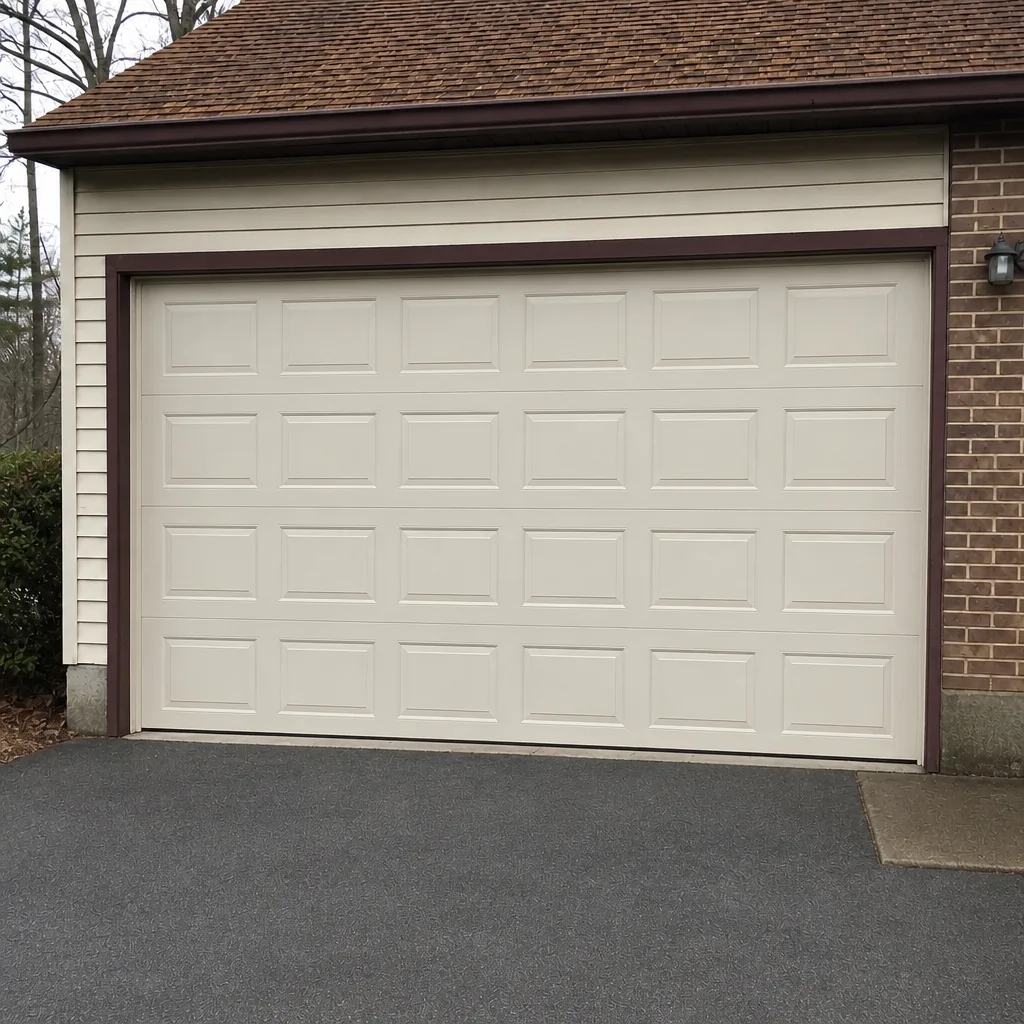 After
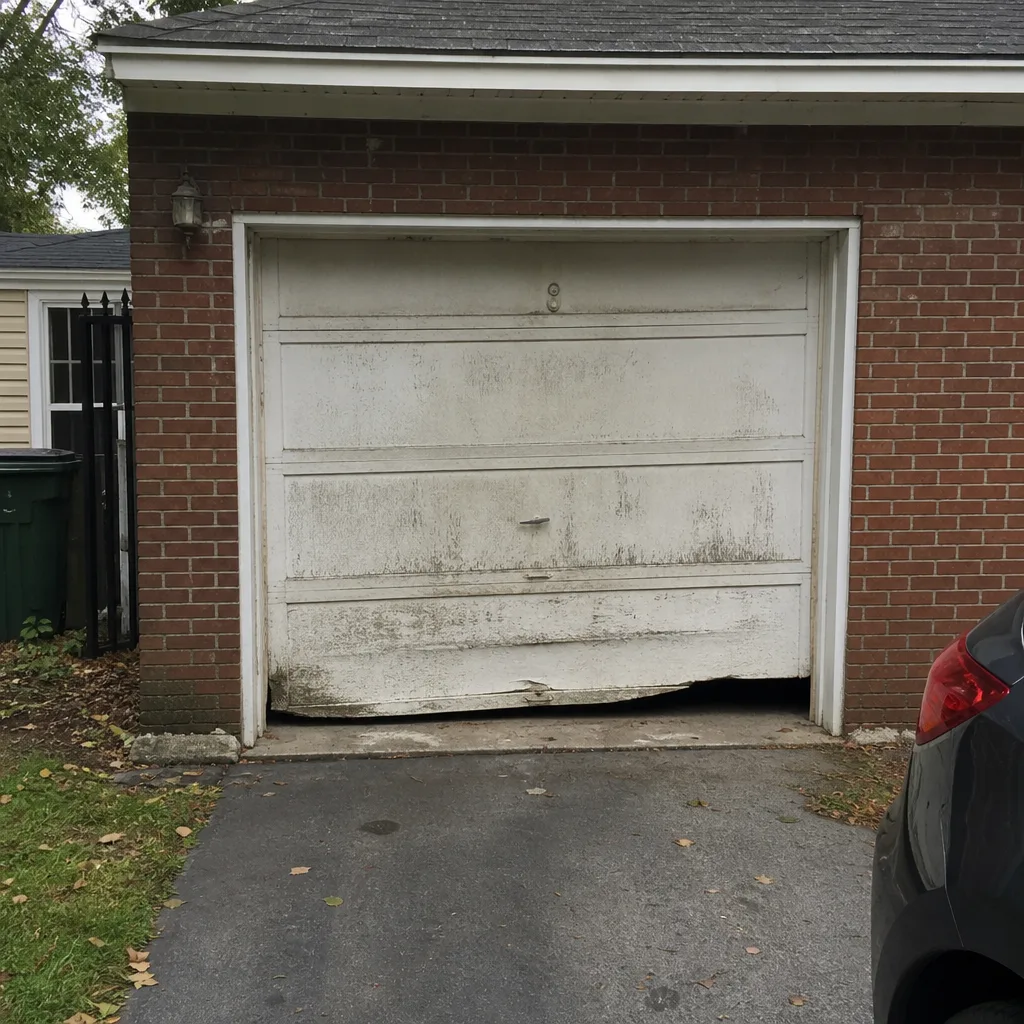 Before
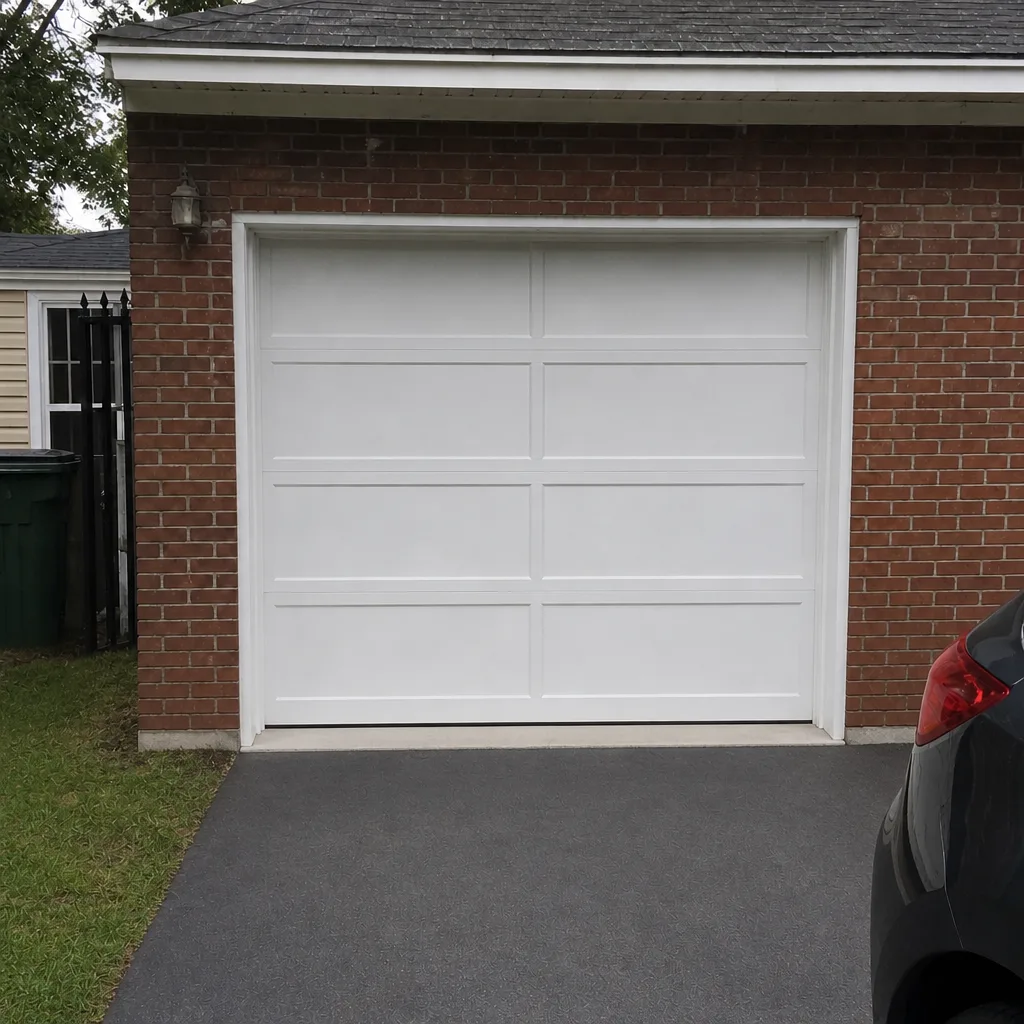 After
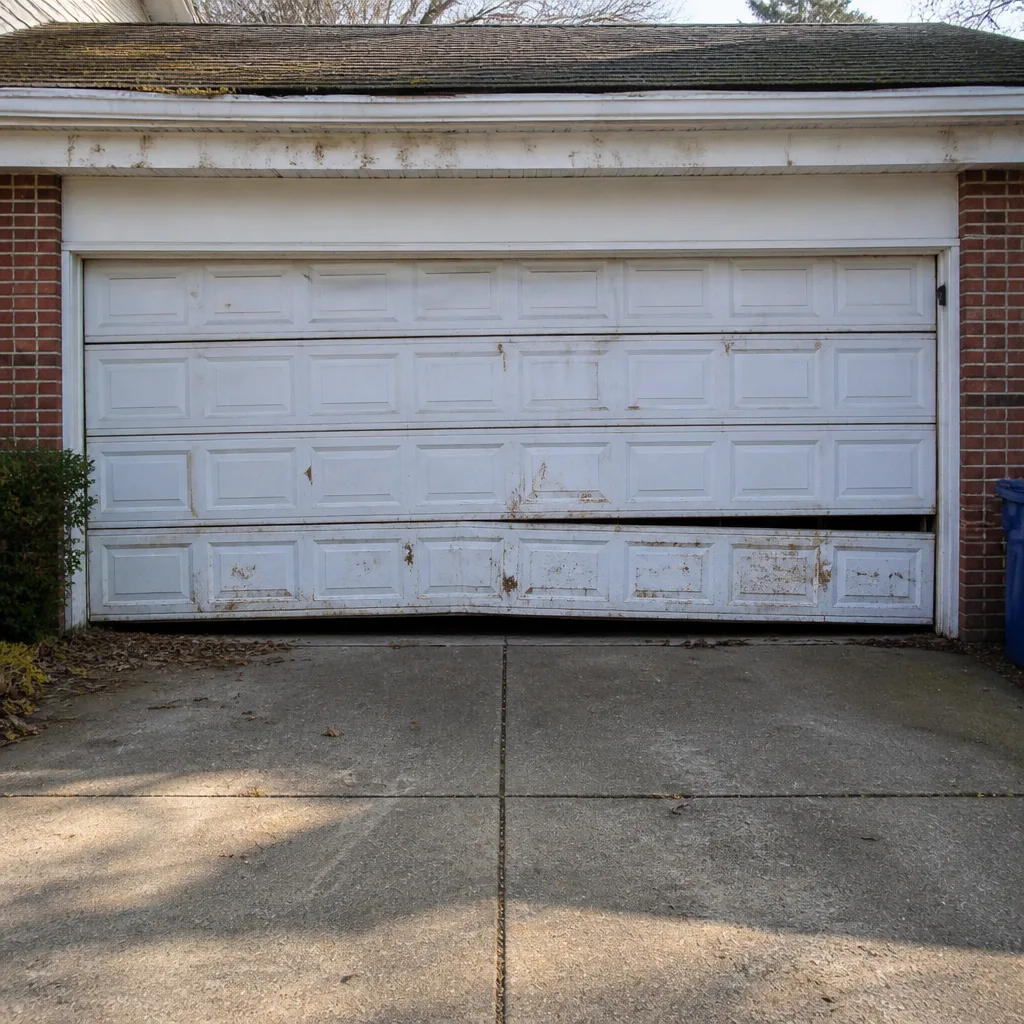 Before
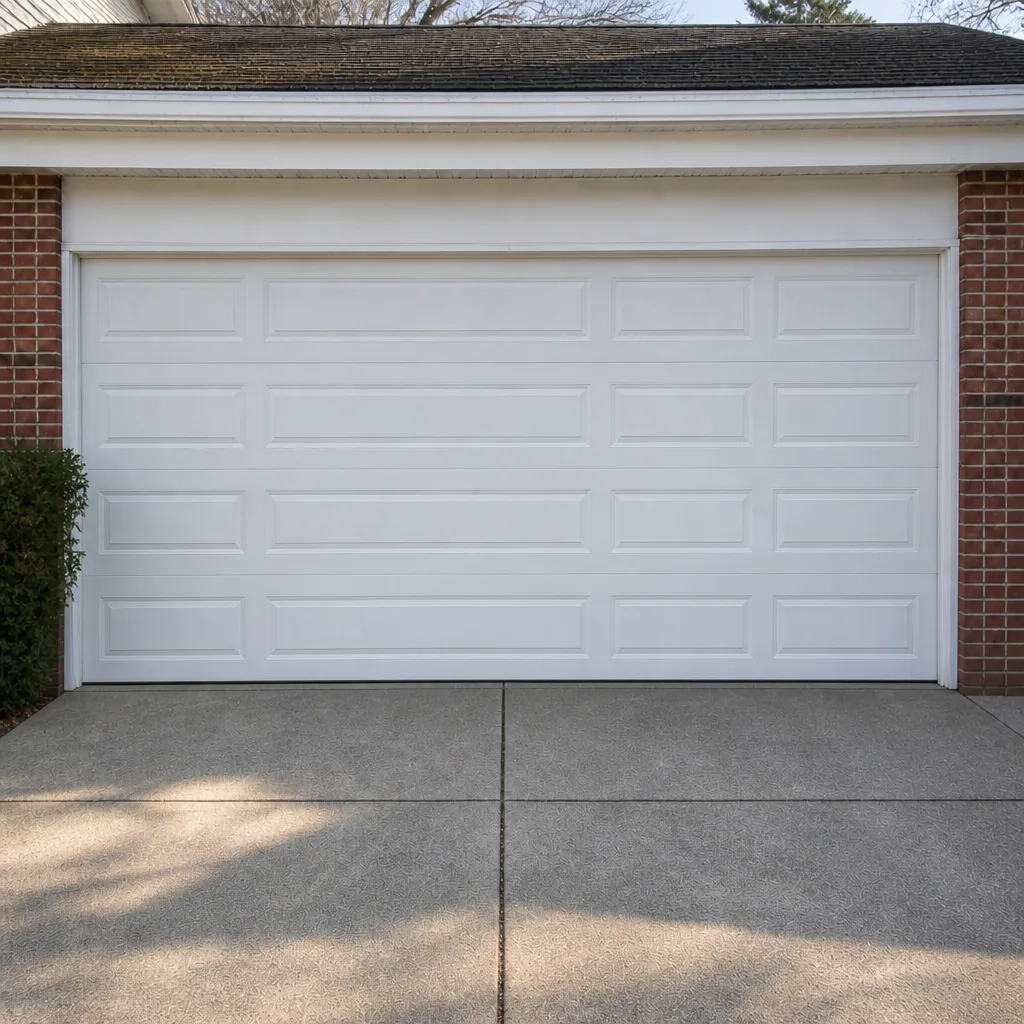 After
When to Call a Professional
Call a professional immediately if:
- The door has come off its tracks or is hanging unevenly with one side higher than the other.
- You heard a loud bang from the garage and the door won’t lift (that’s the sound of a spring failure).
- A cable is visibly off its drum, sagging, or frayed.
- The door won’t close all the way and reverses, or won’t reverse at all.
- The opener runs but the door doesn’t move, or the door moves a few inches and stops.
- The garage is stuck open and your home is exposed.
- You’ve attempted a repair and the door’s behavior has changed.
Columbia Garage Door Repair Co offers free estimates in Columbia. Call (855) 506-9884. We answer 24/7. Fast dispatch from 7am to 7pm, Sunday through Friday. Garage doors are all we do, so each visit is a specialist’s visit.
Frequently Asked Questions
No, and we’d strongly advise against it. Torsion springs store enough energy to cause serious injury, and a wound spring can release faster than a person can react. Spring replacement also requires matching the spring to the door’s exact weight. It’s a job for a trained technician.
Lubrication, photo-eye sensor alignment, weather seal replacement, and cosmetic panel touch-up are all safe. Remote battery changes and re-pairing remotes are fine too. Anything involving springs, cables, bottom brackets, or opener high-voltage wiring belongs with a professional.
It can. Opener warranties typically require proper installation, and a header bracket screwed into material that can’t carry the load, or a misaligned rail, is a common warranty-voiding mistake. The door panel warranty can also be affected if a bracket cracks a panel. Having the install completed by a trained technician keeps both warranties intact.
Pricing depends on the spring type (torsion or extension), the door’s weight, and whether it’s one spring or a matched pair. The written estimate sets the final price and is free. Call (855) 506-9884 for an exact quote, and mention that this is a spring issue so we can route it correctly.
Often yes. Columbia Garage Door Repair Co handles emergency garage door service because a door that won’t close leaves a home unsecured. We answer 24/7. Fast dispatch from 7am to 7pm, Sunday through Friday. If you call outside dispatch hours, the job is booked into the next opening. Call (855) 506-9884 for an exact quote.
In most cases yes. Our team works on equipment from LiftMaster, Chamberlain, Genie, Clopay, Amarr, Wayne Dalton, Craftsman, and Raynor. If you have a different brand, say so when you call and we’ll confirm before we come out. Estimates are free.
The Bottom Line
DIY garage door work isn’t a single question. It’s two lists. Lubrication, sensor alignment, weather seals, and cosmetic touch-ups are worth doing yourself, and a few of them prevent bigger problems down the line. Springs, cables, bottom brackets, and opener high-voltage wiring are a different category entirely. The stored energy in a torsion spring is why the risk-reward math fails there, and why a trained technician is the only sensible route. If you’re in Columbia and you’re unsure which list your repair belongs on, that uncertainty itself is a reason to have it looked at. Diagnosed right, fixed right, the first time. Call (855) 506-9884 for a free estimate. We answer 24/7. Fast dispatch from 7am to 7pm, Sunday through Friday. If you’d like a broader view of Columbia Garage Door Repair Co, we’re happy to walk you through the options.
Written by the team at Columbia Garage Door Repair Co.